
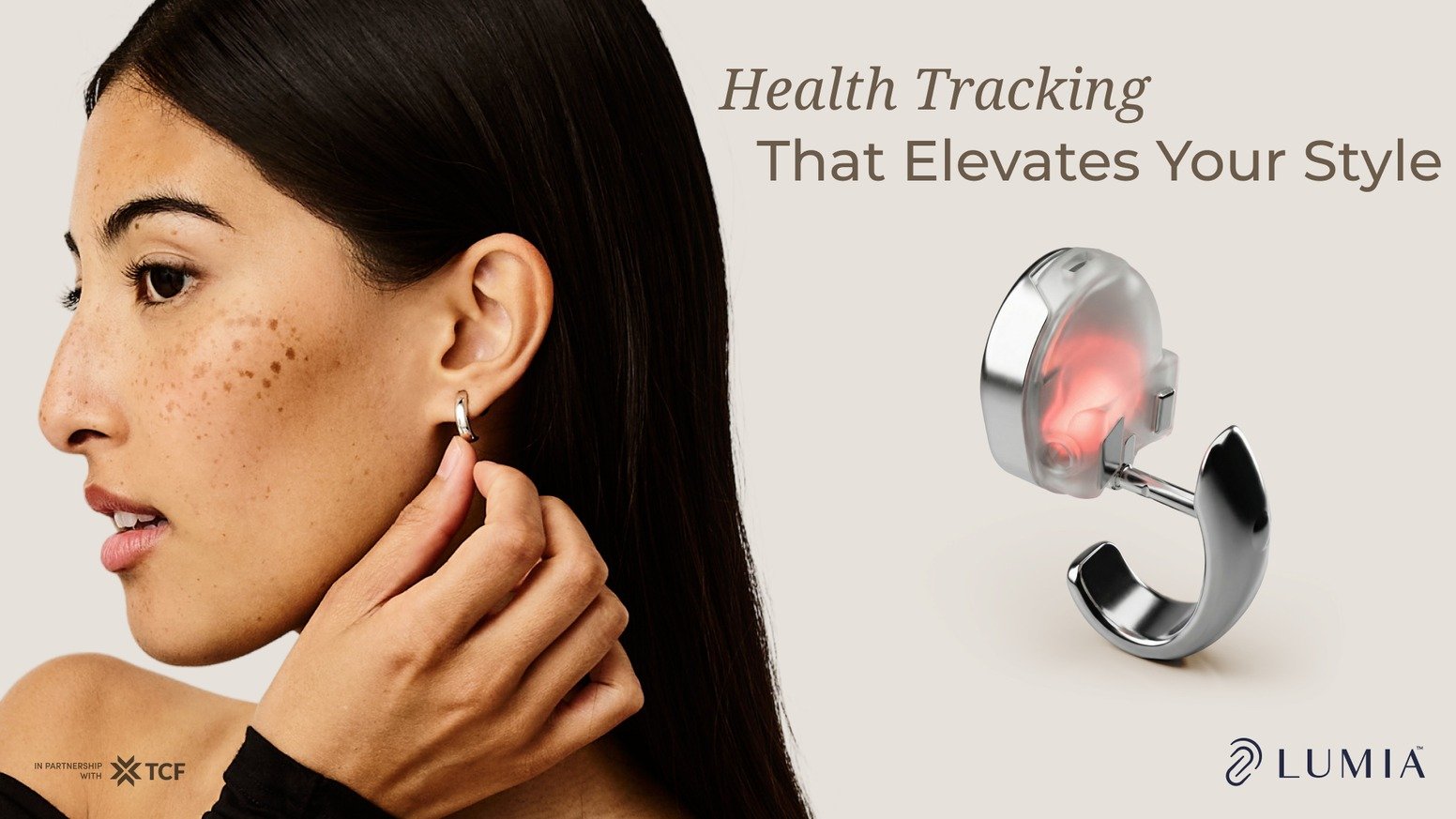
Nobody has ever backed a product because it had six health metrics. They back it because it finally lets them stop hiding.
I keep a mental list of the products I wish more of my clients would design; not because they’re clever, but because they refused a feature everyone assumes is mandatory. Lumia 2 is on that list. A health tracker with no screen, no watch face, no charging anxiety. Just an earring. Less than a gram. Six metrics tracked, and nobody around you would ever guess.
Here’s the part that should stop every hardware founder mid-scroll; the team behind Lumia 2 could have built a smartwatch. That’s the default. That’s what “health wearable” means to most engineering teams. Instead, they built the one thing a smartwatch can never be; invisible. And 6,133 people backed it, putting $2.03 million behind a $10,000 goal. A 203x oversubscription on a product some investors would have called “too niche.”
That’s the story I tell every founder I work with who’s afraid their product idea is “too specific” to fund; specificity isn’t the risk. Vagueness is. Lumia didn’t try to beat the Apple Watch at its own game. They built for the exact person who’d been waiting for health tracking that didn’t announce itself. That’s not a compromise; that’s the whole strategy.
A product doesn’t need to convince everyone. It needs to be unmistakable to the right six thousand people.
I see the same pattern with the hardware founders I help validate before they commit to tooling; the ones who try to please every possible buyer end up with a product that excites no one. The ones who narrow down to a real, specific, slightly uncomfortable constraint are the ones whose presale numbers actually mean something. Lumia 2’s 203x isn’t luck. It’s what happens when a founder trusts a narrow bet enough to let the market confirm it before the factory line ever runs.
If your product idea feels “too specific” to pitch to investors, that might be exactly why it will work with customers. I help hardware founders test that bet with real presale numbers before they spend a cent on engineering they can’t take back.
Got a product that’s specific enough to scare a generalist? Let’s find out if the market agrees with you.
Key figures: $2,030,193 raised; $10,000 goal; 6,133 backers; Campaign ended May 28, 2026
See the campaign: Lumia 2 on Kickstarter